
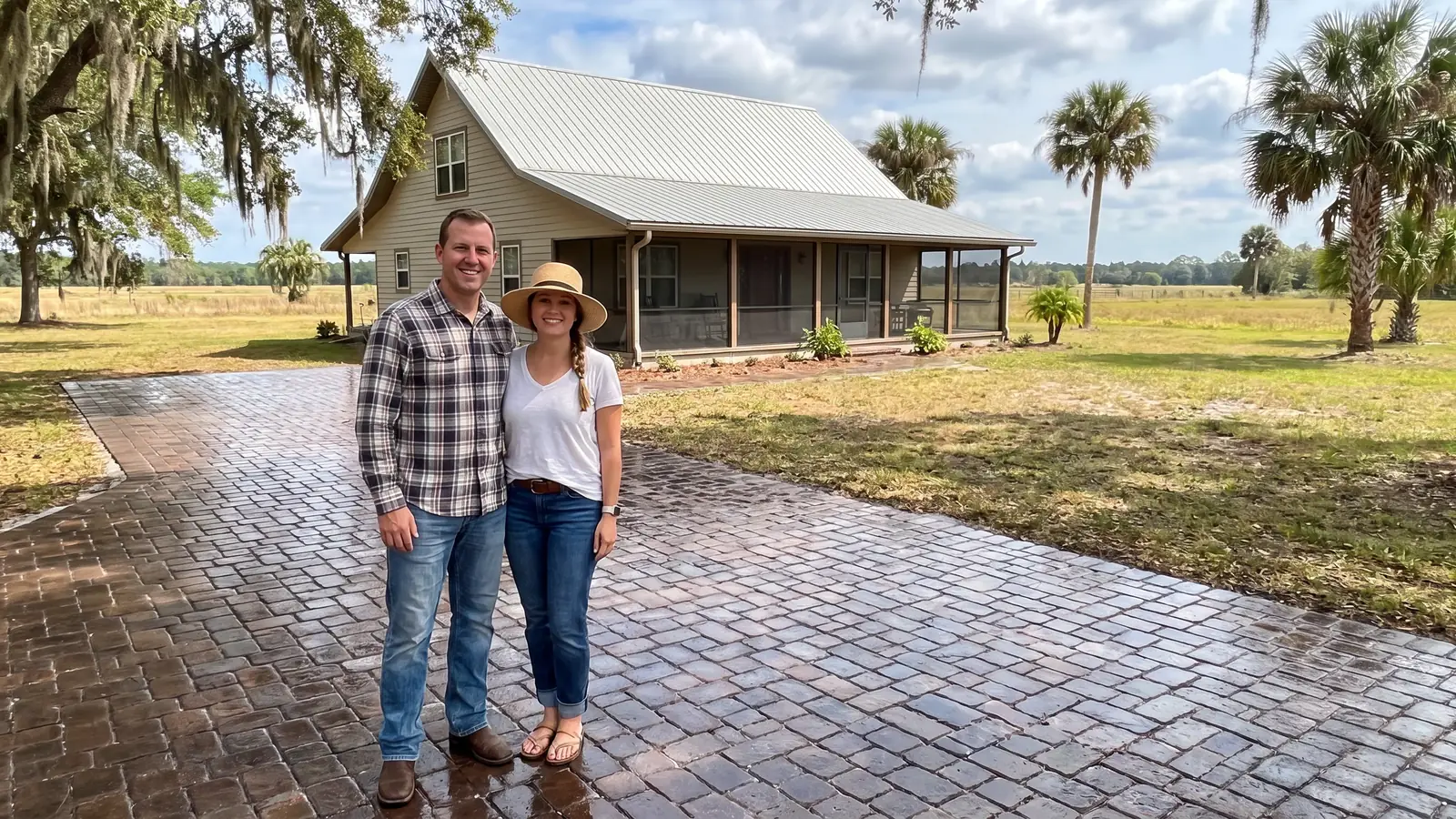
Paver sealing for Palatka homes
Paver Sealing in Palatka, FL
Palatka pavers sit 60 miles up the St. Johns River from Jacksonville, so call (904) 875-5989 for a free sealing estimate.
- Brings out deeper paver color
- Fresh joint sand helps lock pavers in place
- Gives weeds less room to grow
- Makes the surface easier to keep clean
- Free estimate, no obligation
Request a Free Estimate
Free, no obligation.
Fast, careful paver sealing in Palatka
Paver sealing in Palatka reaches homeowners on both sides of the river, and the first step is a free estimate from a local contractor. That contractor handles the wash, the sand and the sealer for drives, patios, pool decks and walks. Send a request through get your free estimate and you will hear back within 1 business day, usually much sooner.
Maybe your pavers were laid by a past owner, and nobody remembers when they were last sealed. The color has faded, the joints have gone thin and a green film sits along the shaded edge. A wash, fresh sand and a new coat can pull that surface back together, so call (904) 875-5989 and tell the contractor what you see.
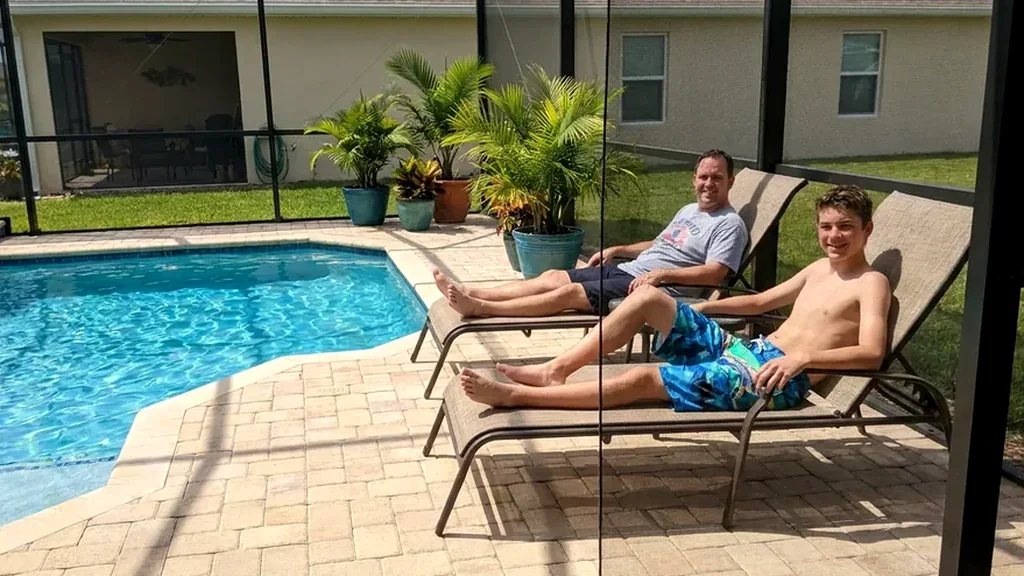
Why hire a local paver sealing contractor in Palatka?
Palatka homeowners often hire someone local because the town sits on a river bend, has many older homes and gets four rainy months each year. To find out how that plays out on your lot, get your free estimate.
Free look, firm price
The contractor inspects your Palatka pavers at no charge and quotes a price before any work begins. You are not obligated to book.
A range that is published
In Northeast Florida the published price is $1.75 to $3.25 per square foot to clean, sand and seal. Use that as your yardstick for any Palatka bid.
Finish to match the house
Choose matte for a quiet look beside older brick and wood, or a wet look for deeper color. Wet shows scuffs sooner.
You keep the final say
You pick the day, the finish and whether to proceed. A Palatka estimate leaves every decision with you.
Get Your Free Estimate in Palatka
Tell us about your pavers in Palatka.
Free, no obligation
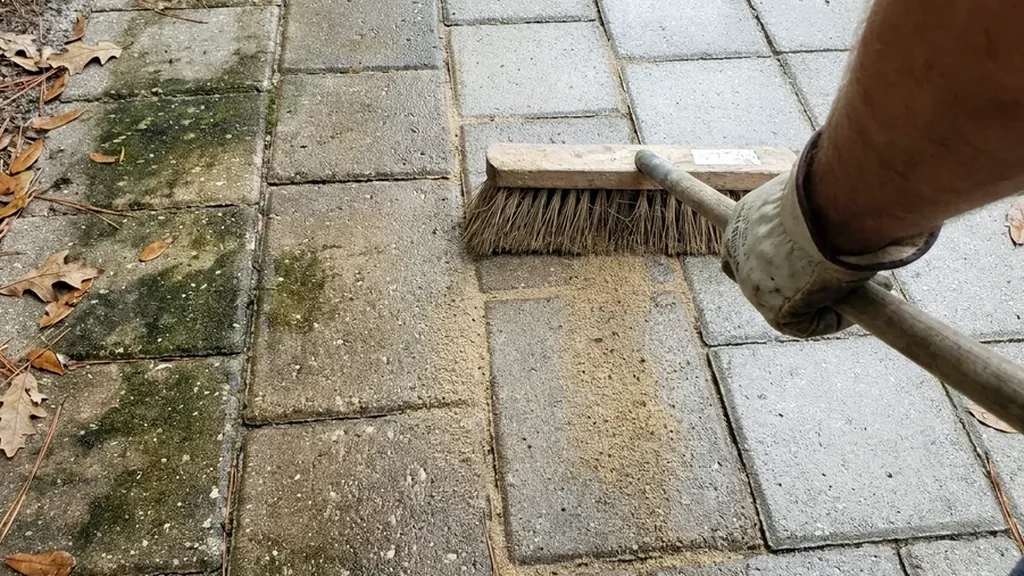
What paver problems show up most in Palatka?
Water that moves the sand
Ravine Gardens shows how water works in this part of Florida. Its two steephead ravines run up to 120 feet deep, and underground water cuts into the banks and carries sand and soil toward the St. Johns River. Rain does the same thing in small on a driveway, washing sand out of the joints and from under the pavers. Palatka averages about 53 inches of rain a year, and a contractor may reinstall pavers where bedding sand was lost to heavy rain. If your drive has a soft spot, point it out early. A soft spot near a downspout or drain is worth pointing out at the estimate. A driveway is flatter than a ravine, but the same pull of water on loose sand applies.
Four wet months, then a long dry run
Palatka's hot, rainy season lasts from June until late September, with each of those months averaging roughly 6.65 to 7.31 inches. The dry season runs from October through May. Pavers that stay damp all summer grow green film, and sealer needs a dry surface. That makes the dry months the natural window for a job. A wash at the end of summer clears what the rainy months left. A few shaded days in a row can bring green back to a north-facing edge. Pavers in full sun dry quickly between storms, which is why the green shows up in the shade first.
A coat nobody wrote down
The Census Bureau estimates the median Palatka home was built in 1974, while the Florida median is 1988. Pavers on an older lot are often a later addition by an earlier owner. A peeling or cloudy coat suggests the old sealer needs attention first. Water-based sealer cannot go over solvent-based sealer, which means someone has to identify the old product. Keeping a receipt or product name for the next coat saves guesswork. A cloudy, flaking patch is the clearest clue that the old sealer is failing. That small detail saves a lot of guessing at the estimate.
Orange streaks from iron-rich water
Most Florida well water is high in iron, and UF extension notes that orange streaks often show up when it is used for irrigation. If your sprinklers spray the pavers, look for rust-colored lines. Sealer would lock those marks in, which means they have to be treated first. Turning the heads away from the paving helps stop new ones. Aiming sprinklers away from the paving cuts down on new rust marks. Iron staining is common across Florida, not only in Palatka, so the contractor knows what to look for.
Old brick next door
Palatka's downtown was rebuilt in brick after the fire of November 7, 1884, and much of the original brick road survives in the gridded eastern streets. Victorian, Colonial Revival, Art Deco and Prairie School buildings stand in the historic districts. Pavers near old brick walls or steps call for care with rinse water and cleaners. Mention any historic brick or stone at your property. The contractor can then plan gentler methods near it, and keep spray and runoff away from the old surface. The North Historic District alone holds 76 historic buildings, so old brick is never far.
Is there a rule to check before sealing pavers in a Palatka historic district?
Possibly, since the City of Palatka Historic Preservation Board handles certificates of appropriateness for construction and renovations in the historic districts. The North Historic District holds 76 historic buildings, and the South District covers 93 acres, so a good share of the old town is covered. Call City Hall to ask whether sealing counts at your address. When you know where you stand, get your free estimate.
Palatka's neighborhoods include Downtown, the two historic districts, Palatka Heights, Newtown and East Palatka. Eastern sections, including downtown and the historic districts, have a street grid where much of the original brick road survives, while the western suburbs follow a looser road pattern. Access differs between the two, which affects how a crew works. Tell the contractor which part of town you live in when you call (904) 875-5989.
The city counted 4,587 housing units in 2020, and census estimates show about half of occupied homes are owner occupied. That means many Palatka pavers belong to landlords or to people who bought a home with pavers already down. Either way the job is the same: wash, re-sand and seal, with a free estimate first. To ask about a rental or a recent purchase, get your free estimate.
What does paver sealing cost in Palatka?
Safe Touch's Jacksonville page lists $1.75 to $3.25 per square foot for a clean, sand and seal. Safe Touch's Jacksonville page says empty joints and failed sealer raise the cost. A Palatka lot with thin sand and an old peeling coat will sit higher in the range than a clean, recent one, which means the walk-through matters more than any phone guess. For a number that fits your lot, get your free estimate.
Access and size move the price as well. A long open driveway is simpler than a small walled patio, and small jobs run higher per square foot since setup and prep do not scale down. Resetting sunken pavers adds work before sealing, and so does moving heavy planters. Call (904) 875-5989 and the contractor can sort out which of these fit your yard.
| Paved area | Typical example | Clean, sand and seal |
|---|---|---|
| 300 sq ft | Small patio or walkway | $525 to $975 |
| 600 sq ft | Two car driveway | $1,050 to $1,950 |
| 1,000 sq ft | Large driveway or pool deck | $1,750 to $3,250 |
| 1,500 sq ft | Driveway plus pool deck | $2,625 to $4,875 |
Math based on the $1.75 to $3.25 per square foot that Northeast Florida paver companies publish. Your contractor sets the actual price after seeing the surface. Repairs, leveling and stripping failed sealer are usually extra.
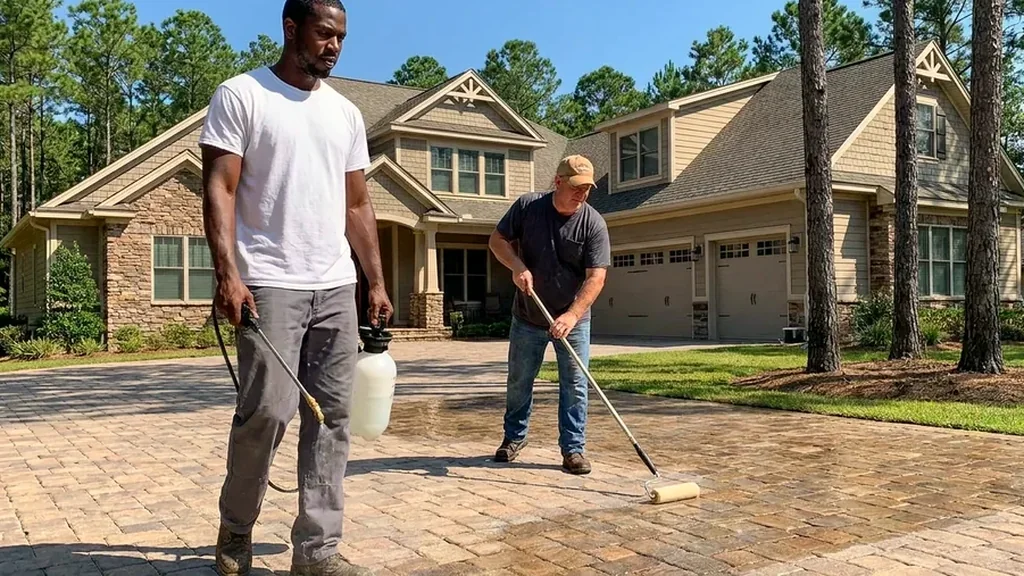
How does a paver sealing job work in Palatka?
Walk the lot and ask about the history
First stop is the runoff path: where rain goes off your Palatka lot, where the shade sits and where the paving meets the house, pool or curb. Sunken or lifted pavers are flagged for a reset, because a coat over a dip simply preserves it. Then comes the question of what sealer is already on the surface. Tell the contractor whatever you know about earlier work, like who laid the pavers or when. Photos of earlier repairs, receipts and product names are all useful. Pavers that sank or lifted can be fixed before sealing, but not by the sealer itself.
Wash the pavers clean
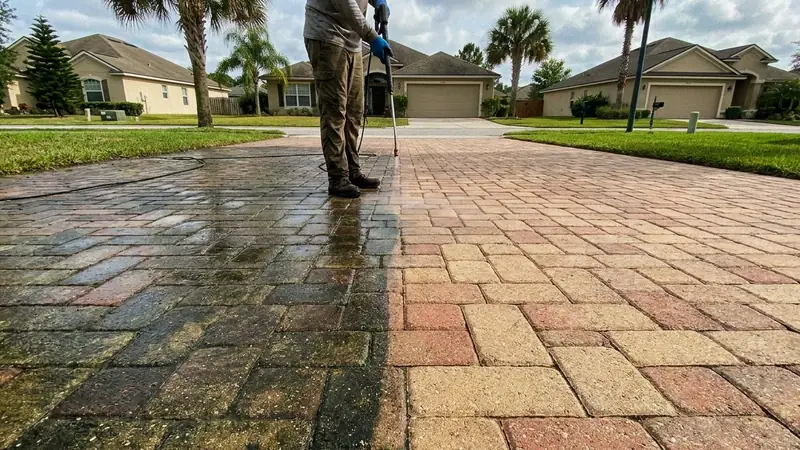
Cleaning removes green film, silt and rust from sprinkler water. Old brick, stone and wood nearby are protected from harsh spray and runoff. Stubborn stains may take more than one pass, and some deep stains will not lift completely. Cleaning comes first because sealer would trap anything left behind. Cleaning also removes the dirt that sealer would otherwise lock in. Rinse water is directed away from beds and from the foundation.
Replace the lost joint sand
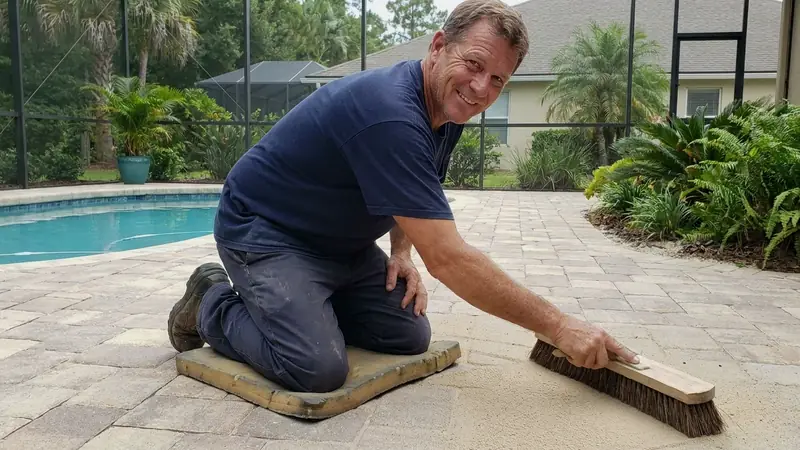
Because washing takes sand from the joints, fresh sand goes in ahead of the coat. Palatka rain empties joints quickly, with about 107 rain days in a typical year, and open joints invite soil and weeds. The sand is swept in and the surface swept clean. Full joints are what the sealer locks in place, so this step is not optional. Full joints are also what keep bedding sand from washing out.
Let the surface dry fully
The pavers must be dry before any sealer goes on. A shaded Palatka yard can stay damp long after a sunny one has dried. The contractor reads the forecast and holds off rather than coating damp pavers. That patience protects the coat from turning cloudy, which means a clear, even finish when it cures. On humid days the wait is longer, and that is normal. Dry-season mornings are the easiest time to schedule a long coat.
Seal and give it time
The sealer is applied in the finish you chose. Foot traffic comes back within hours on most products, per one Jacksonville company, while cars wait roughly a day. Expect a span of two to five years from one coat to the next. Write down the sealer's name so a future coat can match it. A note about the finish matters too, because a change later means stripping. The finish you pick affects how the pavers look beside older brick and wood. A bead of water sitting on the finished surface shows the coat is working.
Complete paver services in Palatka
Four stages shape a Palatka job. The wash takes off green film, silt and rust, new sand refills the joints, and the surface has to dry before the sealer is applied. Skipping any one of them shortens the life of the coat. Call (904) 875-5989 for a time estimate on your lot.
Driveways, front walks, pool decks and patios do not wear alike, and Palatka has all four on many lots. Pavers in shade turn green, those in sun fade, and those near sprinklers pick up rust, so one yard can show three problems. A company that lists Palatka among its service pages describes cleaning and sealing with a free, no-obligation estimate. Tell the contractor what you have when you get your free estimate.
You cannot stack water-based sealer on solvent-based, so whatever is down already limits you. Matte hides scuffs and keeps a natural look, while wet look deepens color but shows wear sooner. A Jacksonville company notes that sealing locks in whatever is there, so sunken pavers are reset first. Call (904) 875-5989 to talk through the finish.
With a rainy season from June to late September, the dry months from October through May give the likeliest chance of a clear day. That does not rule out summer, only that a crew needs a dry window. Shaded yards dry slower than sunny ones, and a damp north-facing patio may need an extra day. To ask about dates, get your free estimate.
Questions to ask before you hire
- How long before car tires can go back on a sealed driveway without leaving marks?
- Can the pool deck and the driveway both be done in one visit?
- How many days should the sealed pavers stay clear of foot traffic?
- What happens if the ground has pushed a few of my pavers out of level?
- My water comes from a well, so can the rust marks from my sprinklers come off before the sealer goes on?
- How do you get dirt and old tire marks out of my driveway pavers?
- Is the sealer you plan to use made for a patio that sits in full sun all day?
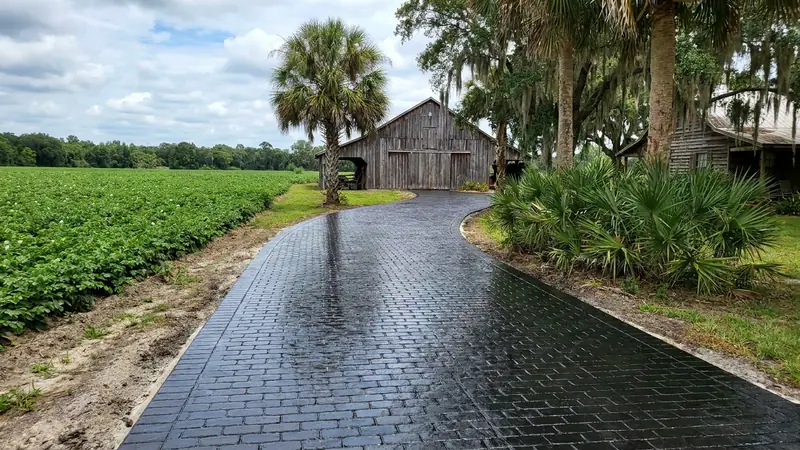
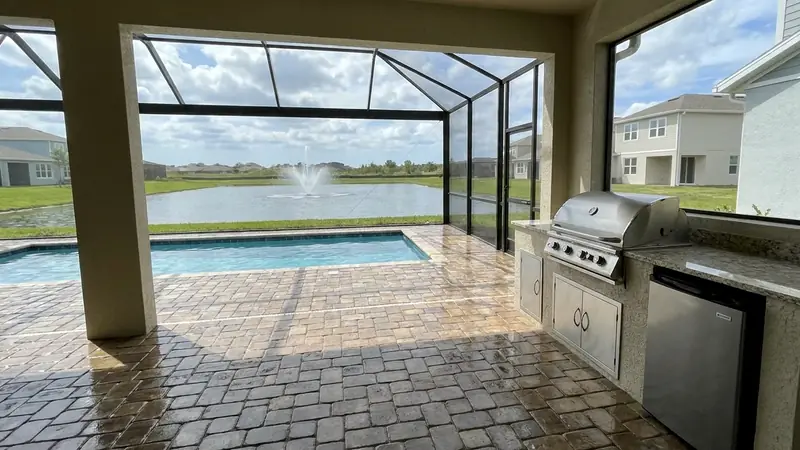
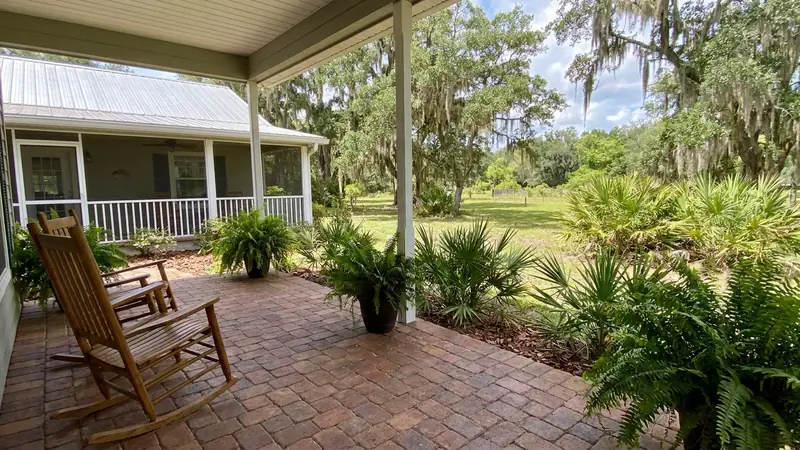
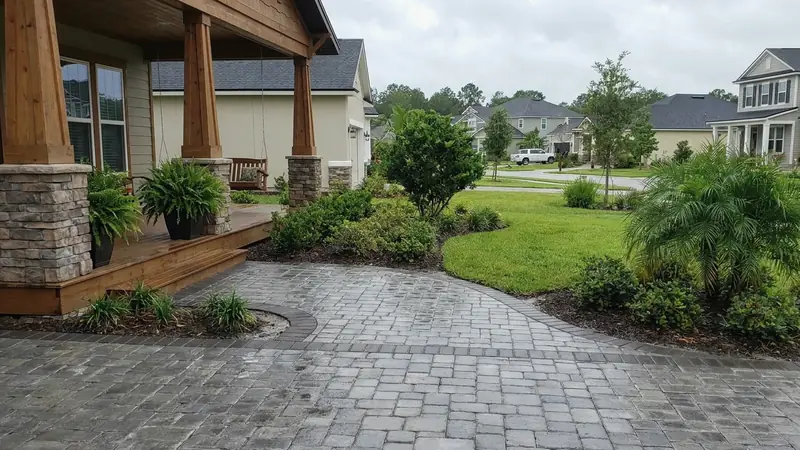
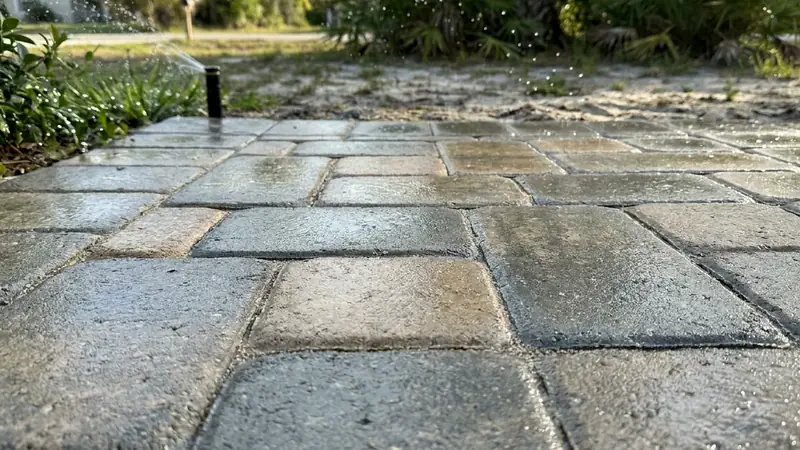
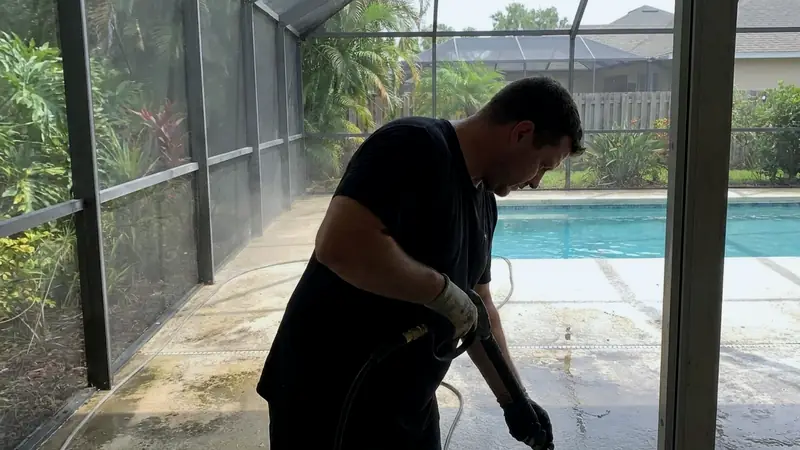
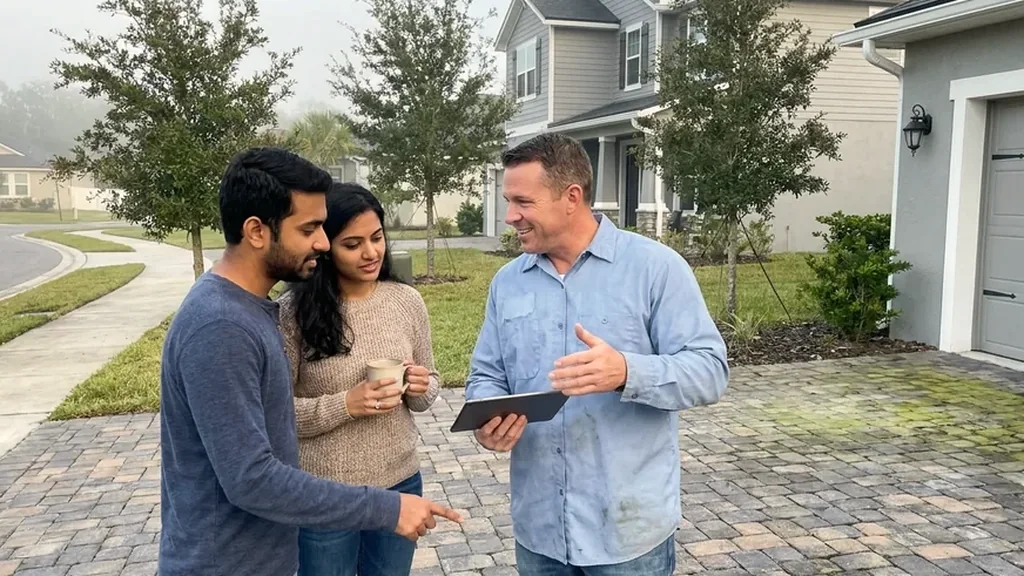
What do sealed pavers look like around Palatka?
Why local matters in Palatka
A contractor who works Palatka knows the town has a river bend, older housing and a long wet season. That helps with timing and with the old-coat question. A crew new to the area may not ask how old your pavers are, or who laid them, and the answer can change the plan. To reach a local contractor, call (904) 875-5989.
Local work also means knowing the different parts of town. Downtown lots are compact and close to older brick, while western suburbs have more open yards. Each calls for different gear and care, and a quote should reflect that. If your lot is hard to reach, get your free estimate and mention it.
Rain shapes the schedule. With about 107 rain days a year, a good local contractor builds in slack rather than rushing a coat onto damp pavers. That means fewer cloudy finishes and fewer return visits. Call (904) 875-5989 to hear how a crew works around Palatka rain.
What makes Palatka different from other towns on the St. Johns River?
Palatka sits about 60 miles upriver from Jacksonville, at a sharp bend that marks the unofficial line between the upper and lower St. Johns. Putnam County was created in 1849, and Palatka was incorporated as a city on January 8, 1853. The fire of 1884 led to a downtown rebuilt in brick. If your pavers sit near that older core, get your free estimate.
Architect Henry John Klutho designed the James Hotel in 1916 and Larimer Memorial Library, which was founded in 1930. Ravine Gardens State Park, built by the Works Progress Administration, hosts part of the Florida Azalea Festival each March. The Bronson-Mulholland House, from 1854, stands in the North Historic District, and the Memorial Bridge carries US 17 across the river to East Palatka. If your pavers sit near one of these Palatka places, call (904) 875-5989 and give the contractor your street.
Frequently Asked Questions
Is it good to seal pavers in Palatka?
Generally yes, and that holds for most Palatka drives and patios. Four rainy months a year feed green film and empty joints, so sealing is worth weighing here. A Jacksonville company lists less UV fade, less joint washout and less mildew among the reasons to seal concrete pavers in Florida. A fresh coat also makes pavers easier to rinse clean.
Is there a pressure washing business near Palatka that also seals pavers?
Yes, a handful of companies serving Palatka list paver cleaning and sealing, and at least one describes a free, no-obligation estimate for Palatka homes. Find out if joint sand is part of the price, what sealer will be used and how long the surface must stay dry. Washing alone leaves the joints empty, so sand and sealer belong in the same visit.
Why is paver sealing so expensive in Palatka?
Prep eats most of the budget, not the sealer. Labor drives the price: the wash, the wait for dry pavers, the sand and a careful, even coat. Open joints on a Palatka lot add to every one of those. Empty joints and failed sealer raise the price, according to one Jacksonville company.
What are the downsides of sealing pavers in Palatka?
Sealer wears and needs a new coat about every two to five years, so it is a recurring cost. A wet look shows scuffs sooner than matte, and sealing needs a dry day, which can delay a job in the rainy season. Changing finishes later means stripping the old coat, so pick one you can live with. It is also a recurring cost, so many owners pair each coat with a yearly look at the joints.
What should I budget to seal pavers in Palatka?
Shops around Northeast Florida post $1.75 to $3.25 per square foot to clean, sand and seal. Joint sand, old sealer and access decide where a Palatka job falls in that range. Get the square footage in writing so you can compare bids. The rest comes down to how much paving you have and what shape it is in.
Does sealing change how my Palatka pavers look beside old brick?
Yes, a little. Matte keeps a natural look that sits quietly beside older brick and wood, while a wet look deepens the color and shines. Palatka's downtown was rebuilt in brick after the 1884 fire, so many yards have old masonry nearby. Either finish needs a clean, dry surface to look its best.
Does Palatka require approval to seal pavers in a historic district?
It can. The Historic Preservation Board issues certificates of appropriateness for construction and renovations in the historic districts. Ask City Hall whether sealing counts at your address before work begins. The North district holds 76 historic buildings and the South district covers 93 acres.
My Palatka pavers were sealed by a past owner, so what now?
Not always. A water-based coat will not go over a solvent-based one, so the contractor must work out what is on there. Peeling or cloudy sealer may need to be stripped, and that adds to the price. A receipt, an old can or the installer's name can all help narrow it down.
How long should I stay off my Palatka pavers after sealing?
After sealing, a Palatka driveway usually takes foot traffic within hours, but cars should wait about a day. A Jacksonville sealing company gives those times, and they vary with the product and the weather. Ask the contractor for the exact window. A shaded driveway may call for the longer end of that range.
Can a coat of sealer lift sunken pavers on a Palatka driveway?
No. Whatever is under the sealer stays put, so low or lifted areas get reset beforehand. Show the contractor any soft spots at the first visit. Dips usually come from lost bedding sand, so the base gets a look as well.
Will sealing stop weeds and green film on Palatka pavers?
It helps with both. Weeds take hold once joints open up and soil settles in, and sealed sand makes a firmer barrier against them. Moss and algae should not grow on pavers unless the area is heavily shaded, and a sealed surface rinses clean more easily. Open joints are the real weak point, so full sand is the first step.
When is the dry season for sealing pavers in Palatka?
Palatka's dry season runs from October through May. The hot, rainy season lasts from June until late September. Dry months give the most clear days, though a job can happen any time of year when the pavers are dry. A shaded patio may need extra drying time even then.
Ready for a Free Estimate in Palatka?
Call (904) 875-5989 and tell us about your pavers.
Free, no obligation