
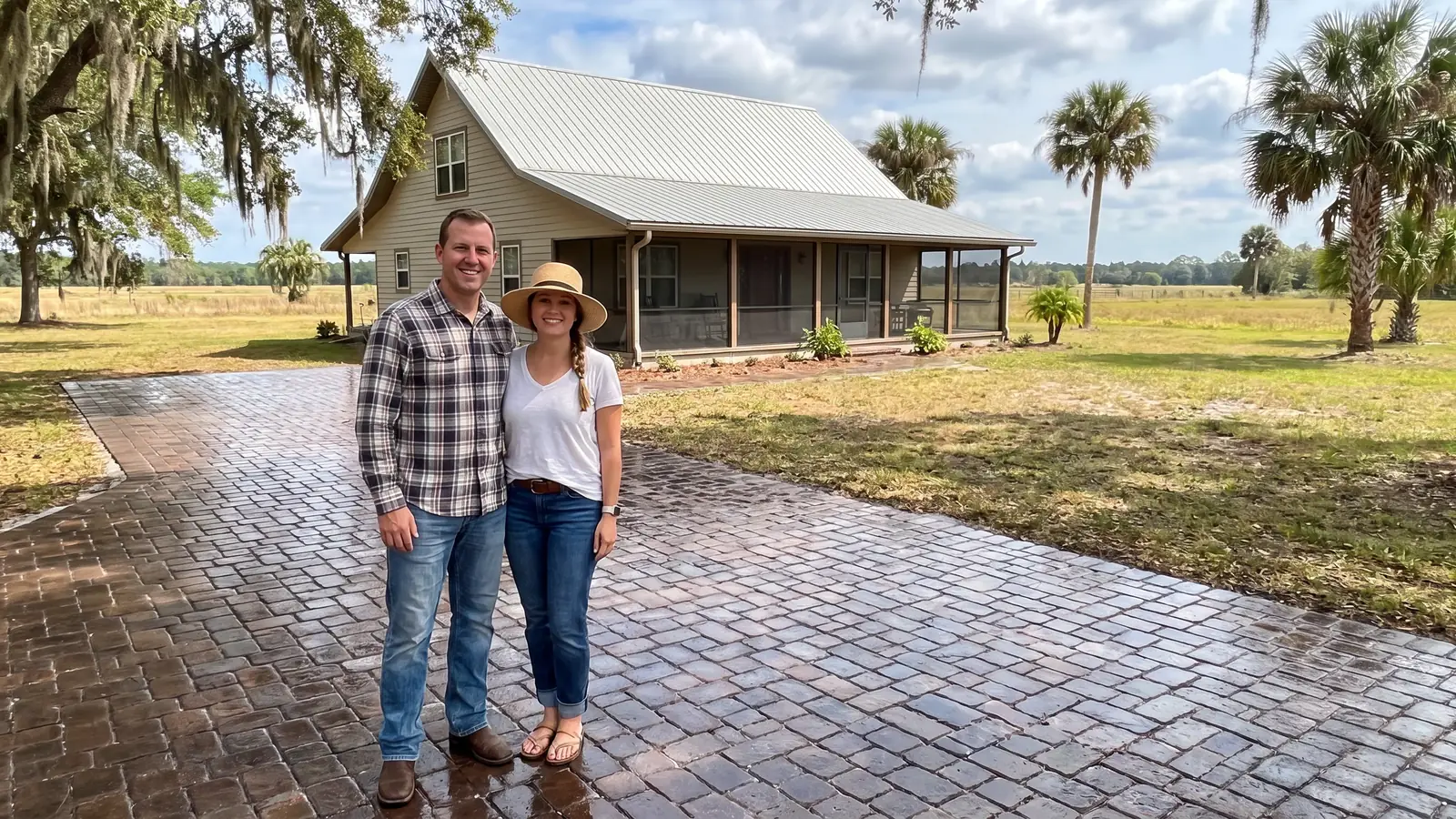
Paver sealing for Palm Coast homes
Paver Sealing in Palm Coast, FL
Palm Coast has 69 miles of canals, so damp is never far; call (904) 875-5989 for a free sealing estimate.
- Brings out deeper paver color
- Fresh joint sand helps lock pavers in place
- Gives weeds less room to grow
- Makes the surface easier to keep clean
- Free estimate, no obligation
Request a Free Estimate
Free, no obligation.
Fast, careful paver sealing in Palm Coast
Palm Coast homeowners can get paver sealing quoted at no charge, and a local contractor then washes, re-sands and seals the drive, deck, lanai or walk. Ask for a quote through get your free estimate and a reply should reach you within 1 business day, usually much sooner. You can ask about any section of the city, east or west of I-95.
Maybe the lanai by the canal has gone green at the edges, and the driveway has turned a chalky gray. Joint sand has worn down, and weeds sit in the gaps. A deep wash, new sand and a fresh coat can make the whole surface look even again, so call (904) 875-5989 and tell the contractor what you see.
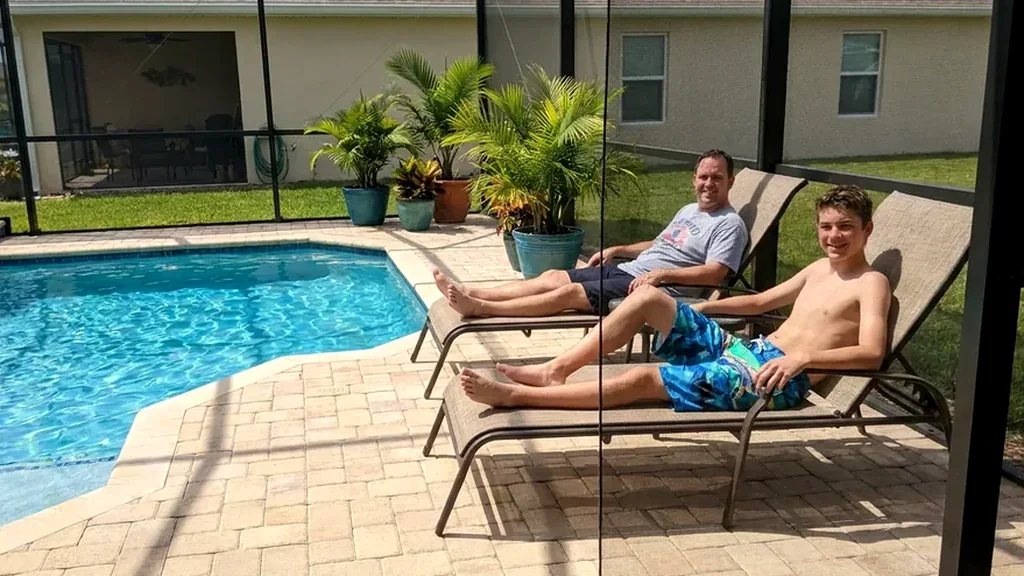
Why hire a local paver sealing contractor in Palm Coast?
Palm Coast homeowners hire local paver contractors because canals, salt air and slow-draining sand all shape how a job goes. To learn what that means for your street, get your free estimate.
A free visit first
A contractor visits, studies your Palm Coast pavers and names a price before any work starts. The visit is free and carries no obligation.
Check it against the range
Northeast Florida companies publish $1.75 to $3.25 per square foot to clean, sand and seal. Use that number to size up your Palm Coast bid.
Pick matte or wet look
Matte gives a natural look and safer footing near the pool. A wet look deepens color but shows scuffs sooner.
You set the schedule
You choose the date and the finish, and you can say no. Nothing about a Palm Coast estimate locks you in.
Get Your Free Estimate in Palm Coast
Tell us about your pavers in Palm Coast.
Free, no obligation
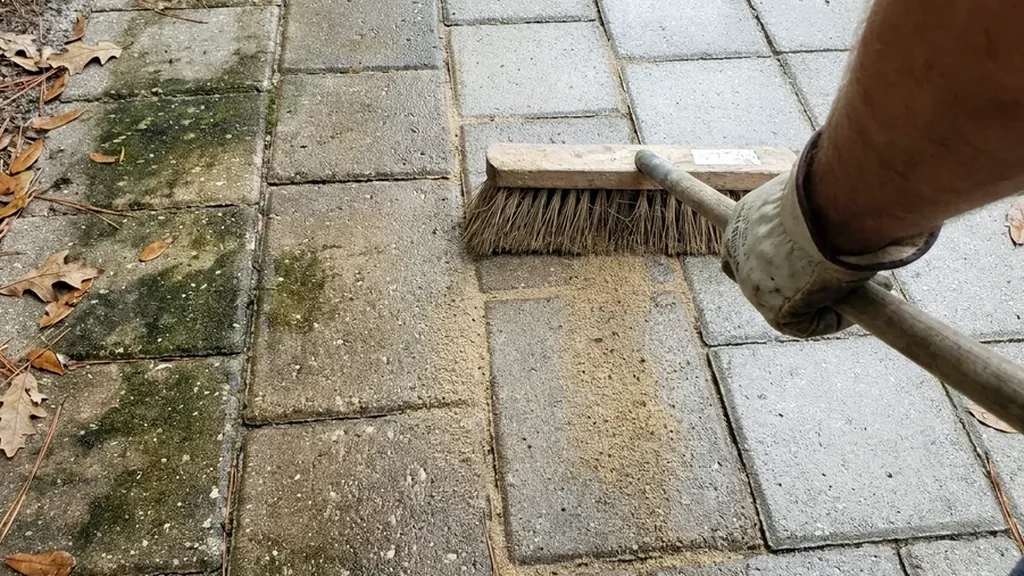
What paver problems show up most in Palm Coast?
Canals that keep the air damp
The canal network includes 46 miles of freshwater canals and 23 miles of saltwater canals. Freshwater Finish, a local company, says coastal humidity and salt air from the Atlantic and the Intracoastal speed up fading, joint erosion, algae growth and staining on Palm Coast pavers. A lanai next to a canal sees that damp every day, and a house on a saltwater canal sees salt as well. Green film starts in the corners that never fully dry. A deep wash clears it, but a sealed surface is what keeps it from returning quickly. A house on a saltwater canal in Palm Harbor sees salt as well as damp.
Sand that drains slowly
The USDA describes the Bimini soil series, first mapped in Flagler County, as deep, somewhat poorly drained, slowly permeable sand on low ridges near the coast. That describes a soil type in the county, not your lot. Where water drains slowly, pavers stay damp longer and bedding can shift. Sealer needs a dry surface, so a low driveway may need extra time. Ask the contractor to check the low end of your drive first. The city has built swales, culverts and retention ponds to control flooding, which shows how much water the ground has to handle.
A long storm season
The Atlantic hurricane season runs from June 1 to November 30, and heavy storm-season rain pulls sand from paver joints. A Jacksonville cost guide advises sealing in fall, once hurricane season ends, to protect pavers through the dry winter. Open joints give soil a way in and weeds a place to start. Check the joints after any hard rain, and ask for a top-up of sand if they look low. That small step keeps weeds from getting a start. The area feels a tropical storm or hurricane about every 2.73 years, so storm-season rain is a regular test.
Older coats on older streets
The first Palm Coast homes went up in 1972, and by 1975 ITT had sold more than 38,000 lots. Fifty years of building means a mix of ages, and many pavers here are later additions, and the coat on them may be unknown. Freshwater Finish says heavily eroded joints or a failing old sealer call for restoration prep first. If your sealer looks cloudy or flaky, say so at the estimate. The contractor can tell a failing coat from simple dirt. That is common on lots that have changed hands more than once.
Screens, shade and slick decks
A Palm Coast company says canal moisture, shade, irrigation stains and tree cover wear on pavers here. Screened lanais hold humidity, so mildew builds on pool decks, and a wash alone does not stop it returning. Freshwater Finish says treating algae and organic buildup reduces slip hazards on decks and walkways. Matte or penetrating finishes keep better traction when the deck is wet, and one Jacksonville contractor says anti-slip additive belongs in any pool deck finish. Treating algae is a safety step as well as a cosmetic one.
Which part of Palm Coast am I in when I ask for a quote?
Name your section or your neighborhood, and the contractor can place you and plan the visit. Palm Coast sections carry letters, such as R for Lehigh Woods in the south, L for Matanzas Woods in the north and P for Pine Grove and Belle Terre in the center. Interstate 95 splits the city, so it helps to say which side you live on. Tell the contractor when you get your free estimate.
Sections C and F are Palm Harbor, on the east side, where saltwater canal streets give houses access to the Intracoastal Waterway. Section W is Pine Lakes, an older neighborhood. Salt air, canal damp and age of the pavers all differ between those two places, so the plan differs too. Call (904) 875-5989 and say where you live, and the contractor can plan for the local conditions.
East of the Intracoastal is the Hammock, joined to the mainland by the 65-foot Hammock Dunes Bridge, a privately operated toll bridge completed in 1988. A Palm Coast company lists Hammock Beach, Palm Coast Plantation, Indian Trails, Matanzas Woods and Lehigh Woods among the areas it serves. The estimate covers all of those places, and the contractor can reach them. To book a visit, get your free estimate.
What does paver sealing cost in Palm Coast?
In Palm Coast the published Northeast Florida range, $1.75 to $3.25 per square foot, covers the clean, the sand and the seal. In Palm Coast, canal damp, lost joint sand and old sealer push a job up or down inside that range, and the walk-through is where those get counted. Freshwater Finish says restoration prep comes first when joints are heavily eroded. For a price on your lot, get your free estimate.
Size and access move the number. Smaller projects generally cost more per square foot, according to a Jacksonville guide, because the prep stays the same size. Failed sealer that must be stripped adds cost too, as do gates, stairs and furniture to move. Call (904) 875-5989 and the contractor can tell you which of these apply to your yard.
| Paved area | Typical example | Clean, sand and seal |
|---|---|---|
| 300 sq ft | Small patio or walkway | $525 to $975 |
| 600 sq ft | Two car driveway | $1,050 to $1,950 |
| 1,000 sq ft | Large driveway or pool deck | $1,750 to $3,250 |
| 1,500 sq ft | Driveway plus pool deck | $2,625 to $4,875 |
Math based on the $1.75 to $3.25 per square foot that Northeast Florida paver companies publish. Your contractor sets the actual price after seeing the surface. Repairs, leveling and stripping failed sealer are usually extra.
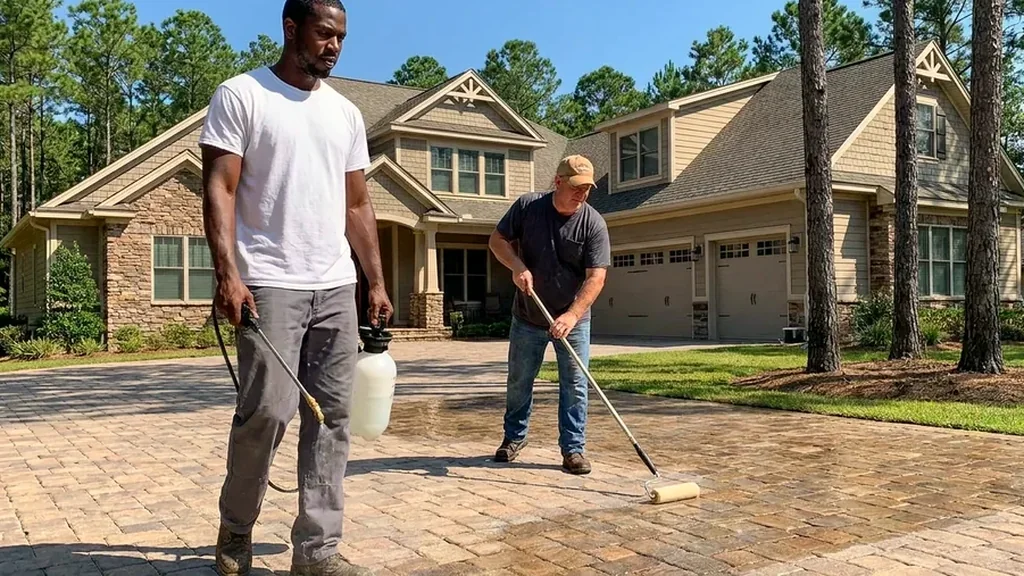
How does a paver sealing job work in Palm Coast?
Walk the lot and check the old coat
The walk-through starts with drainage, meaning where your Palm Coast lot sheds water and where the canal, the screen or the trees keep things wet. Any pavers that sank or lifted get marked for resetting, since sealer cannot level them. The old coat gets identified, since a water-based one cannot sit on a solvent-based one. Say what you know about earlier work, from the installer to the year it was done. A quick note on which section you live in helps the contractor plan the day.
Wash away film, mildew and salt
Cleaning removes the green film, mildew and salt that canal air leaves behind. Stains from sprinklers and tires get their own treatment. Pressure stays in check, since a trade supplier says exceeding 3,000 PSI on standard concrete pavers risks stripping the surface. Runoff is kept off the lawn and the screen, and deeper stains may need more than one pass. Canal-side lanais get extra attention along the screen line.
Fill every joint
Washing takes sand out of the joints, so they are topped up again ahead of the coat. Full joints keep soil out, discourage weeds and give the sealer something solid to hold. Sand is swept in until it stops settling. Strays are cleared from the surface and every joint gets a final look. Sealing locks the sand in, so the next storm does not carry it off.
Let the pavers dry
The surface has to be dry before sealer goes on. A lanai by a canal or a shaded patio can take hours longer than an open driveway. The contractor tracks the forecast and holds the date rather than sealing damp pavers. Sealer applied over moisture can turn cloudy, which is why patience matters here. Mornings can stay damp longer near the water, which can push the start time.
Seal and keep off for the right time
Sealer is sprayed and back-rolled in the finish you picked. A Jacksonville company says foot traffic is usually fine within hours and cars should stay off for about a day. On Palm Coast pavers, plan for two to five years between coats, going by what companies quote. Have the product and finish written down. Matte is a safe default beside a pool, and a wet look can suit a front walk.
Complete paver services in Palm Coast
Palm Coast jobs go wash, sand, dry, seal. Washing clears green film, mildew and salt from the pavers and joints, and the sand goes back in because washing pulls the old sand out. Sealer is last, so nothing dirty gets trapped. Call (904) 875-5989 for the time each step takes on your lot.
Palm Coast homes mix driveways, front walks, screened pool decks and lanais, and each surface wears in its own way, depending on sun, shade and traffic. Driveways take tires and sun, while decks take splash and mildew. Natural stone needs different sealer chemistry than concrete, so the surface decides the product. Tell the contractor what you have when you get your free estimate.
Sealer is water-based or solvent-based, with matte or wet-look finishes. Whatever sealer is down already decides, because water-based will not go over solvent-based. A Jacksonville guide says film-forming sealers can trap moisture and create slip hazards on pool decks, so most decks get a penetrating sealer. Call (904) 875-5989 to discuss your deck.
Palm Coast sees daily summer thundershowers and a cooler, drier winter, so a sealing day has to be picked with the forecast in mind, and a clear stretch is worth waiting for. A Jacksonville guide says fall sealing after hurricane season protects pavers through the dry winter, and spring sealing locks in the surface before humidity peaks. To ask about dates, get your free estimate.
Questions to ask before you hire
- Do you charge extra to drive out to a home on a long dirt or county road?
- Can the pool deck and the driveway both be done in one visit?
- Do you move my potted plants and furniture, or do I clear the area first?
- My water comes from a well, so can the rust marks from my sprinklers come off before the sealer goes on?
- What does the job cost if only part of my pavers need work, like the front walk?
- How many days should the sealed pavers stay clear of foot traffic?
- Will someone look at my pavers in person, or is the price set from photos?
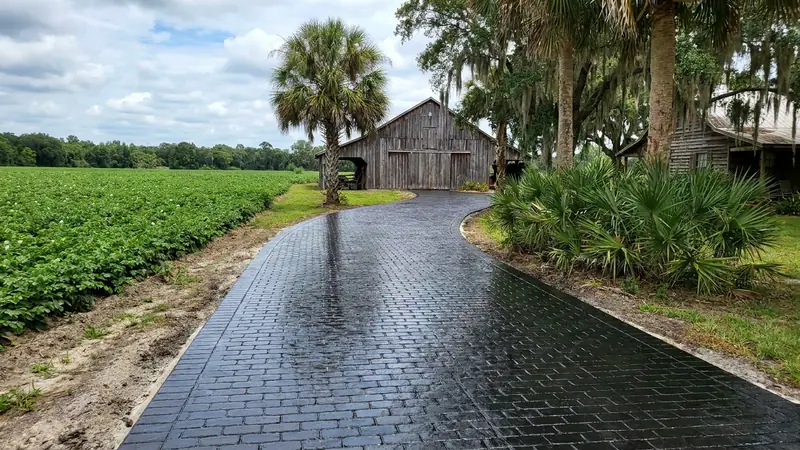
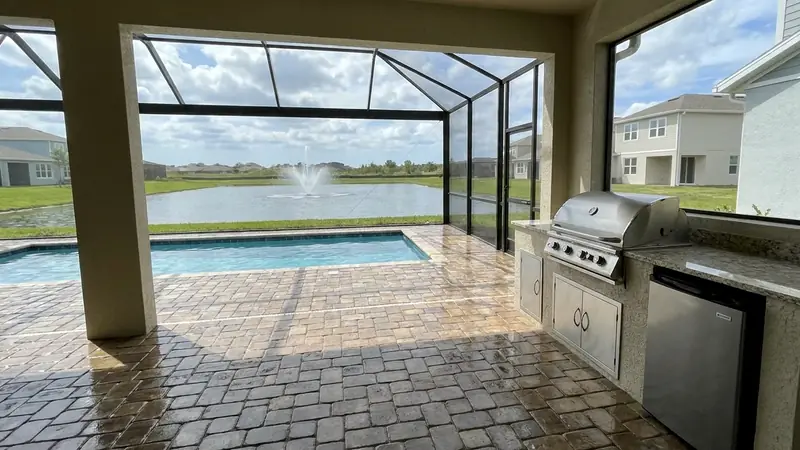
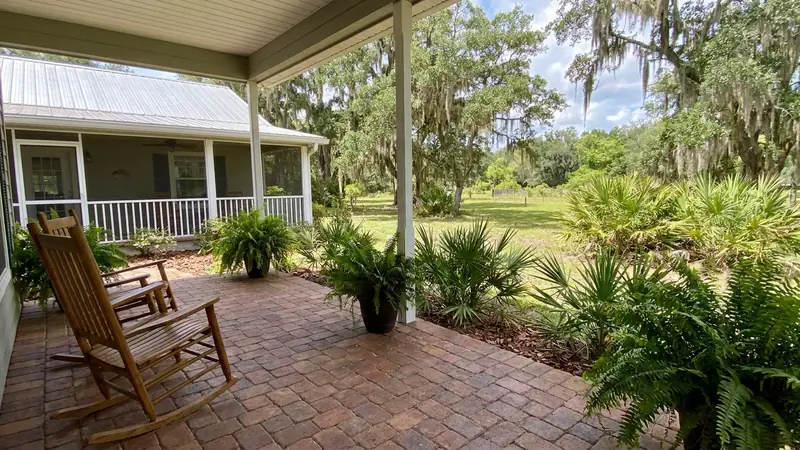
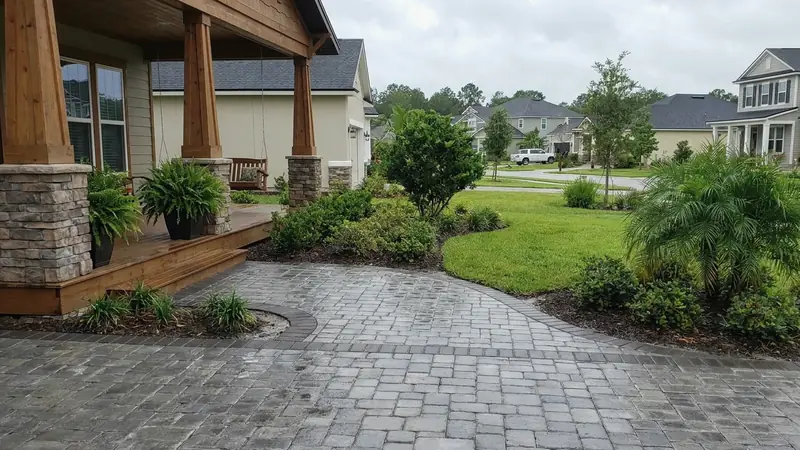
What do sealed pavers look like around Palm Coast?
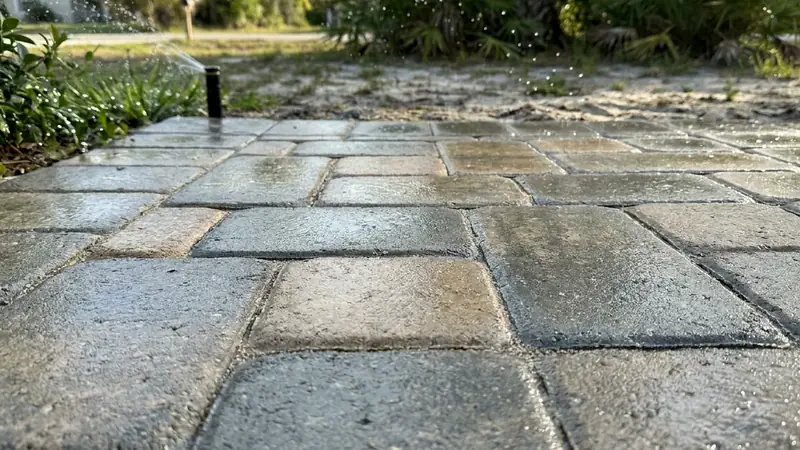
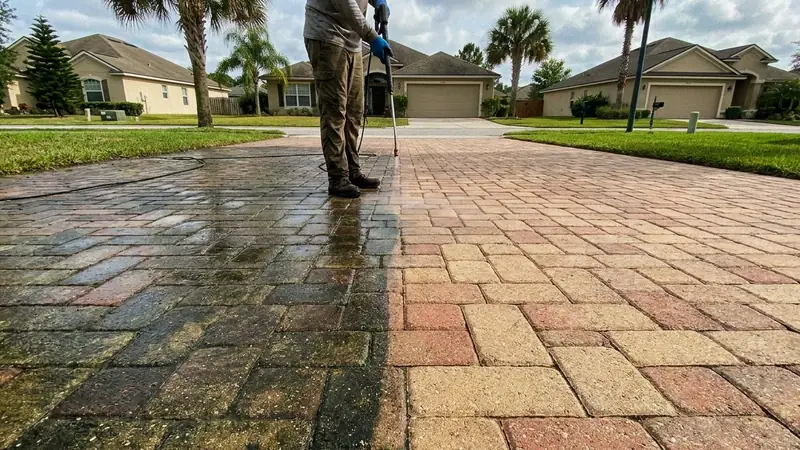
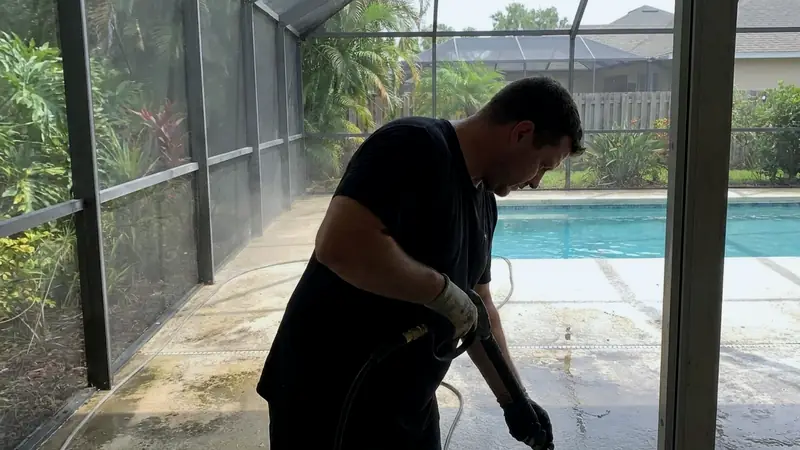
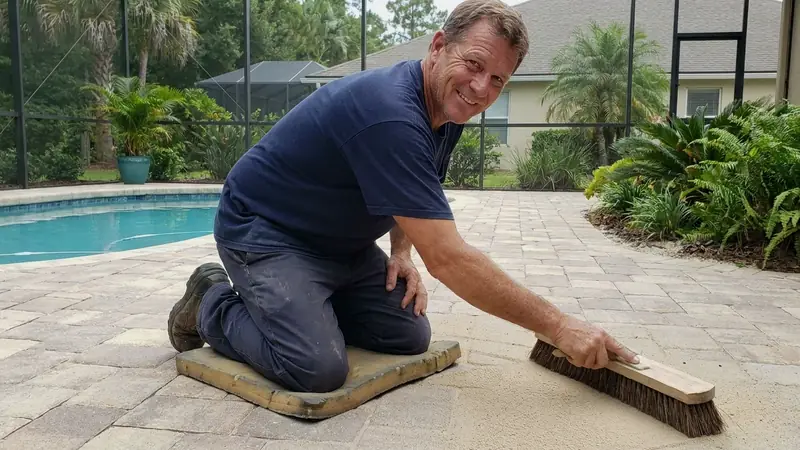
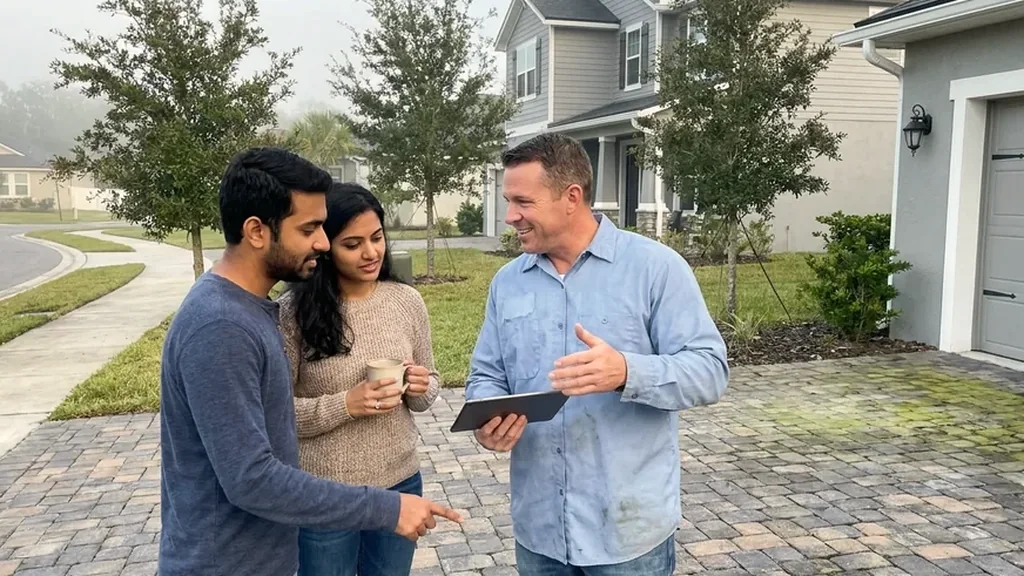
Why local matters in Palm Coast
A contractor who works Palm Coast knows the city is divided by I-95, cut by canals and ringed by the Intracoastal Waterway. That affects access, humidity and salt exposure from one street to the next. A crew from out of town may plan for the wrong conditions, and you pay for the mistake. To reach a local contractor, call (904) 875-5989.
Local work also means knowing the age of the housing. Palm Coast began selling lots in the early 1970s, so some pavers have been through more than one owner and more than one coat. A contractor used to that will ask about earlier sealers and check for a failing coat. If you are not sure what is on yours, get your free estimate and say so.
Timing matters near the coast. Storm-season rain arrives quickly, so a local contractor leaves slack in the schedule. That keeps the finish clear and even, with fewer return trips. Ask how weather is handled when you call (904) 875-5989.
What should I know about how Palm Coast was planned?
ITT Community Development Corporation began developing Palm Coast in 1969 with a plan for 48,000 home sites on about 42,000 acres, with paved streets and central water and sewer. Homes began going up in 1972, and ITT had sold over 38,000 lots by 1975. Palm Coast incorporated on December 31, 1999. If your pavers are on a lot from those early years, get your free estimate and say roughly when the house was built.
By 2020 the city counted 89,258 people, with a median age of 51.6. Its Utilities Stormwater division designs and builds canals, swales, culverts, ditches and retention ponds to control flooding, and the city has more than 130 miles of trails. The European Village, near the Hammock Dunes Bridge, opened in 2006 with almost 100 condos above shops and restaurants. Near any of these Palm Coast places, call (904) 875-5989 and give your street name.
Frequently Asked Questions
Is sealing good for Palm Coast pavers?
Yes, for most Palm Coast driveways and patios. Freshwater Finish says humidity, salt air and storm-season rain speed up fading, joint erosion and algae here, and a protected surface resists new algae growth. A sealed surface is also easier to keep clean, and sealing after a wash is the step that holds the result.
Which pressure washing business in Palm Coast also seals pavers?
Yes. Several Palm Coast companies list paver sealing and restoration alongside pressure washing. Check that joint sand and a named sealer are in the quote, since a wash by itself is only the opener.
Can I pressure wash patio pavers in Palm Coast?
It is possible, but it carries risk. Family Handyman warns that pressure washing may damage pavers if you use the wrong equipment, and a trade supplier says exceeding 3,000 PSI risks stripping the surface. A contractor sets the pressure for your pavers and refills the joints afterward.
Why does Palm Coast paver sealing run so expensive?
In Palm Coast the biggest share of the price is prep rather than the sealer itself. Hours go mostly to the wash, the drying wait, the sand and an even application. Eroded joints and failed old sealer add to it. Small jobs carry the same prep as big ones, so the per-foot cost climbs.
What price range applies to sealing a Palm Coast driveway?
Shops across Northeast Florida commonly list $1.75 to $3.25 per square foot for the whole three-step job. A Palm Coast job lands higher when joints are badly eroded or old sealer must be stripped. Make sure the total square footage appears on the quote.
How often do Palm Coast pavers need resealing?
Quotes from companies put the gap at two to five years. Canal damp, salt air and sun can pull a coat toward the shorter end. When water soaks in and darkens the paver, the coat has worn out.
When should I seal pavers in Palm Coast?
A Jacksonville guide says fall sealing after hurricane season protects pavers through the dry winter, and spring sealing locks in the surface before summer humidity peaks. Hurricane season runs from June 1 to November 30. Any time works if the pavers are fully dry.
Is a second sealer allowed over what is on my Palm Coast pavers?
Not always. Because water-based product will not bond over solvent-based, the old coat has to be identified. A Jacksonville guide says white, hazy or flaking sealer from a prior job must be stripped first.
How long should cars stay off Palm Coast pavers after sealing?
A Jacksonville company says walking is usually fine within a few hours while cars should stay off about a day. Humidity and shade can slow the cure, so a damp canal-side yard may need longer. Ask how long the product on your Palm Coast pavers needs to cure.
What finish is safer around a Palm Coast pool deck?
Matte is the safest finish near pools. A Jacksonville contractor says a pool deck needs an anti-slip additive with any finish, because gloss is slippery when wet. A later switch of finish means stripping the old coat first.
Can sealer raise pavers that sank in Palm Coast?
No. Sealing locks in whatever is there, so sunken or lifted pavers are reset first. Show the contractor any low spots, especially near the driveway edge.
Ready for a Free Estimate in Palm Coast?
Call (904) 875-5989 and tell us about your pavers.
Free, no obligation