
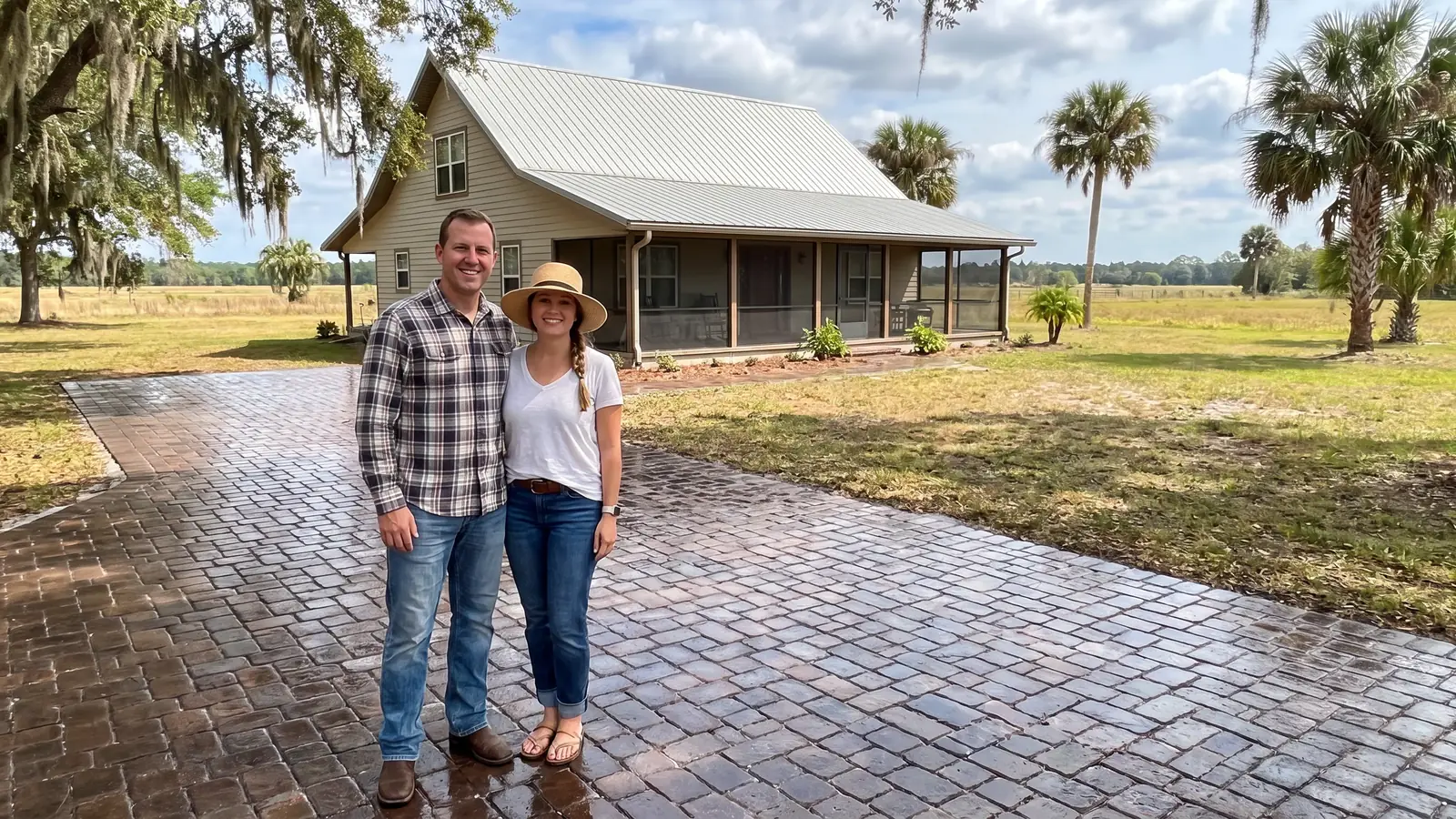
Paver sealing for San Jose homes
Paver Sealing in San Jose, FL
Between the Bolles School and Goodbys Creek, San Jose pavers get a free sealing estimate when you call (904) 875-5989.
- Brings out deeper paver color
- Fresh joint sand helps lock pavers in place
- Gives weeds less room to grow
- Makes the surface easier to keep clean
- Free estimate, no obligation
Request a Free Estimate
Free, no obligation.
Fast, careful paver sealing in San Jose
Paver sealing is available across San Jose, from the oak-lined streets near Via de la Reina to the newer blocks along San Jose Boulevard. The estimate for cleaning, re-sanding and sealing a drive, a front walk or a pool deck is free. Ask for one with get your free estimate and you will hear back within 1 business day, usually much sooner.
Picture the walk to your front door: gray-green in the shade, weeds standing in the joints, the color gone flat. Clean them, refill the joints, add a coat, and the same stones turn back into a single warm tone. To talk before you ask for anything in writing, call (904) 875-5989 and tell the contractor what your walk looks like.
Why hire a local paver sealing contractor in San Jose?
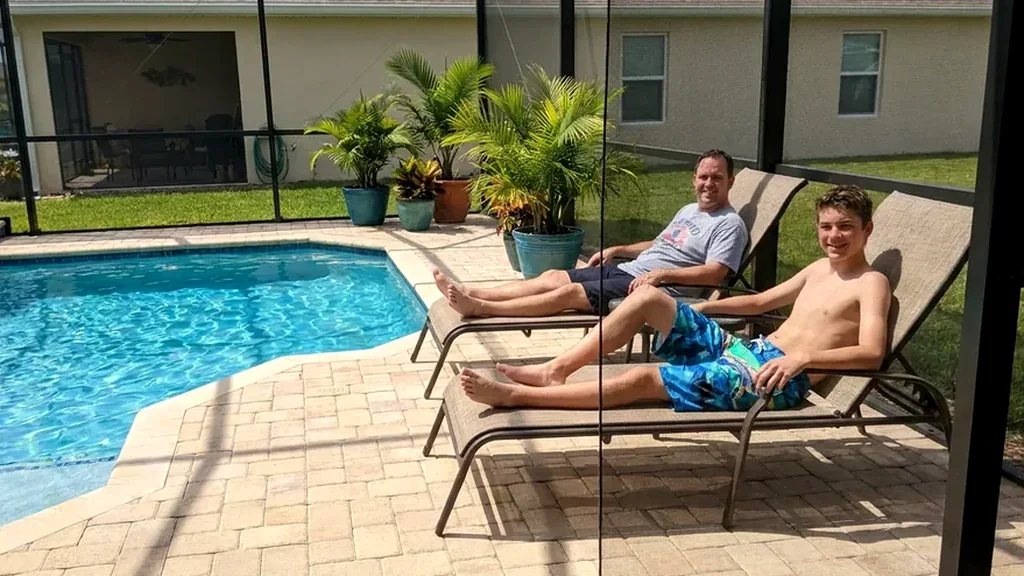
San Jose homeowners tend to hire locally because three eras of building, big live oaks and a creek corridor all change how a job should go. Ask how those three things apply on your block with get your free estimate.
Free look at your pavers
The contractor looks at your San Jose driveway, walk or pool deck at no charge. You hear a price before you agree to anything.
The price range on record
The regional published price is $1.75 to $3.25 per square foot for cleaning, sanding and sealing. Hold any San Jose quote against it.
A finish that fits the house
Matte keeps a Mediterranean Revival front in the spotlight, while a wet look brings extra shine and picks up scuffs earlier.
You make the call
You pick the date, the finish and whether to go ahead. A San Jose estimate carries no obligation, so take your time.
Get Your Free Estimate in San Jose
Tell us about your pavers in San Jose.
Free, no obligation
What paver problems show up most in San Jose?
Oak leaves that never stop falling
The University of Florida says live oaks never drop all their leaves, and large moss-draped oaks shade lawns across San Jose. That means leaf litter can land on a driveway in any month. Wet leaves can leave brown prints on bare pavers, and a driveway with a thin coat or none shows them most. One Jacksonville paver company says spills sit on a sealed surface longer, so they rinse off before they soak in.
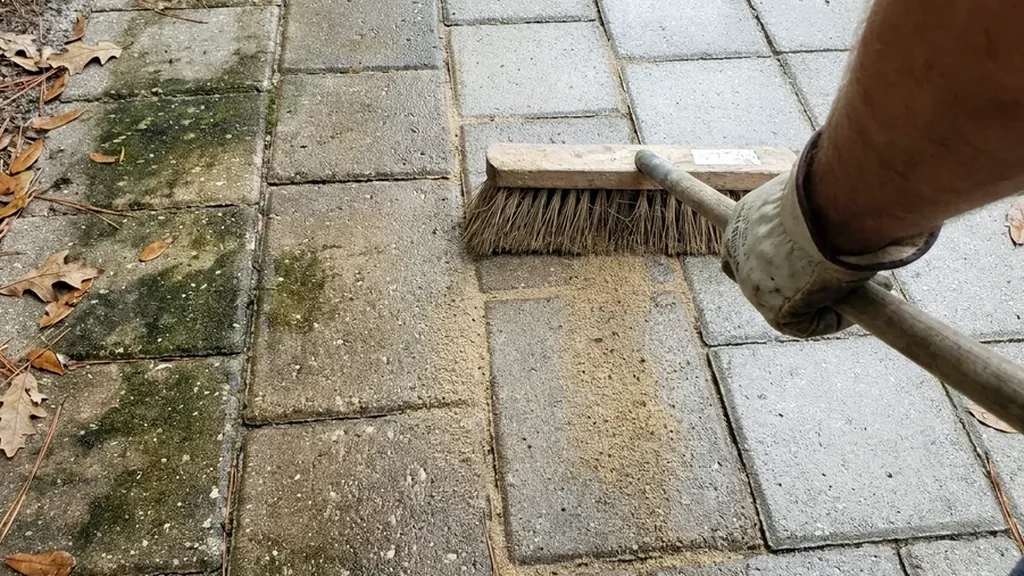
Green film under a wide canopy
A live oak canopy can spread 60 to 120 feet, wide enough to shade a whole front yard. Pavers that stay damp in that shade tend to go green. One local paver company calls dark mildew along shaded strips and garage edges a sign it is time to seal. Your San Jose walk may show it first, especially on the side that gets no afternoon sun. A wash lifts the film, and a fresh coat makes the next round easier to rinse.
Joint sand that rain keeps moving
The Jacksonville area sees roughly 52 inches of rain each year, much of it in short, hard summer storms. The soil is mainly sand and clay. Hard rain shoves sand out of the joints, and washing takes out more. Open joints let dirt in and give weeds a place to start, which means sand goes back in before any sealer.
Shade and debris near the creek parks
Camp Tomahawk Park has mature oak, pine and maple trees, and its creek runs to Goodbys Creek near San Jose Boulevard. Homes close to that corridor can get shade and falling debris from more than one kind of tree. Roots follow the same trees. One local paver company warns that root-lifted sections should be fixed before sealing, because a coat of sealer keeps the bump.
A coat from a different decade
San Jose homes date from the 1920s Estates through the postwar streets to the 1980s Villages. A driveway may have been sealed more than once by earlier owners. Because water-based sealer cannot go over a solvent-based coat, whatever is already down chooses what can follow. Water that soaks in within seconds, instead of beading, means the old coat is spent. Knowing that early keeps the price honest.
Does a home near the creek seal differently than one near Via de la Reina?
The steps are the same, but the setting changes the plan. Near Via de la Reina and San Jose Boulevard, the 1920s Estates houses are Mediterranean Revival, and 21 of the original houses are on the National Register of Historic Places. Toward San Clerc Road and Goodbys Creek, many blocks hold postwar ranch and midcentury modern homes. Say which type of block you live on when you get your free estimate.
John Nolen's 1925 plan drew 1,911 lots on a radial street pattern, with Spanish city names and paved sidewalks, a rare thing for a Florida suburb then. Only 37 buildings were finished before the crash, and the land was re-platted after World War II. That is why one San Jose block can hold a 1920s stucco house beside a 1960s ranch, with two different driveways. Call (904) 875-5989 and mention the age of your house.
Gated communities and HOAs add a step, and San Jose has both. Florida law lets an association review plans only where its own declaration or guidelines give it that power, and a denial has to name the rule it relies on. Check your documents for paver rules before work starts. Then get your free estimate with the finish you plan to choose, and ask the contractor to note it in the estimate.
What does paver sealing cost in San Jose?
Across Northeast Florida, published prices for cleaning, re-sanding and sealing pavers run from $1.75 to $3.25 per square foot. Where a San Jose job lands in that range depends on shade growth, the state of the joints and any old sealer. Size drives the final bill, since more square feet means a higher total at one rate. For a figure on the pavers at your house, get your free estimate and the estimate carries no fee.
Access counts too. A wide driveway off San Jose Boulevard is easier to work than a walled courtyard behind a 1920s house, where gear is carried in by hand. Sunken or root-lifted sections need repair first, since sealer keeps the dip. A quick call to (904) 875-5989 lets the contractor sort out which of those fit your lot.
| Paved area | Typical example | Clean, sand and seal |
|---|---|---|
| 300 sq ft | Small patio or walkway | $525 to $975 |
| 600 sq ft | Two car driveway | $1,050 to $1,950 |
| 1,000 sq ft | Large driveway or pool deck | $1,750 to $3,250 |
| 1,500 sq ft | Driveway plus pool deck | $2,625 to $4,875 |
Math based on the $1.75 to $3.25 per square foot that Northeast Florida paver companies publish. Your contractor sets the actual price after seeing the surface. Repairs, leveling and stripping failed sealer are usually extra.
How does a paver sealing job work in San Jose?
Look over the lot and the old coat
The contractor starts by walking your San Jose driveway, walk and pool deck. Low spots, root-lifted edges and loose pavers get noted, because sealer would lock in any dip. Those get fixed first, then the whole surface is sealed. The contractor also asks what is on the surface now, since water-based sealer cannot go over solvent-based. Mention a gate, an HOA or a past coating at this step. You can walk the lot with the contractor and point out any spot that worries you.
Wash off the leaf film and mildew
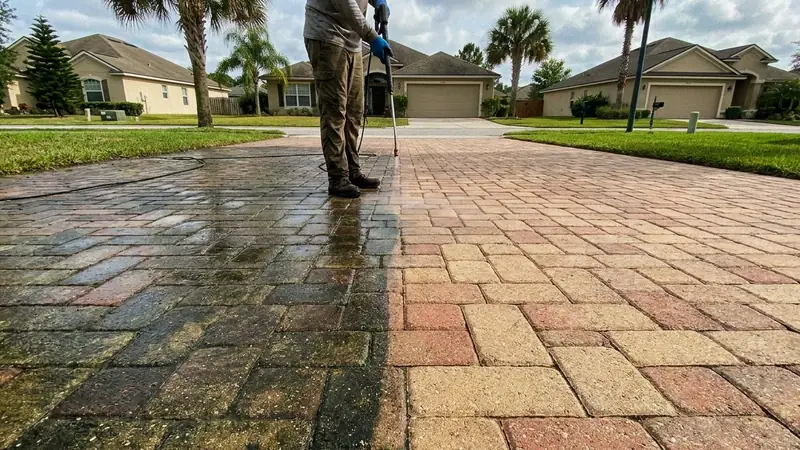
The wash comes next. Under big oaks it lifts green film, dark mildew along the garage edge and brown leaf prints. Oil drips and rust dots get a pre-treatment, though a deep stain can stay faintly visible. Rinse water stays off the walls where the pavers meet the house. That matters most on an older Mediterranean Revival home, where the walls are part of what you are protecting. Plant beds beside the walk need care too.
Fill the joints with fresh sand
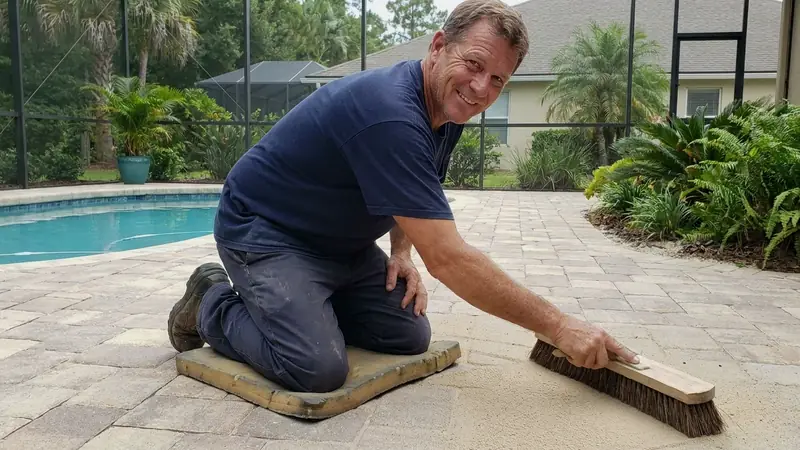
The wash empties the joints, and new sand has to fill them again ahead of the coat. San Jose sits on ground that is mostly sand and clay, and rain here totals roughly 52 inches each year, so open joints fill with dirt fast. The contractor sweeps in sand, compacts it and blows the surface clean. Sealing comes after the sand, never before.
Let the pavers dry all the way
Sealer needs a dry surface. A shaded San Jose patio under live oaks can stay damp long after a sunny drive has dried. A coat applied over moisture can cloud, so a careful contractor waits and watches the sky. A summer storm can move the day by a few days, and that is better than sealing over moisture.
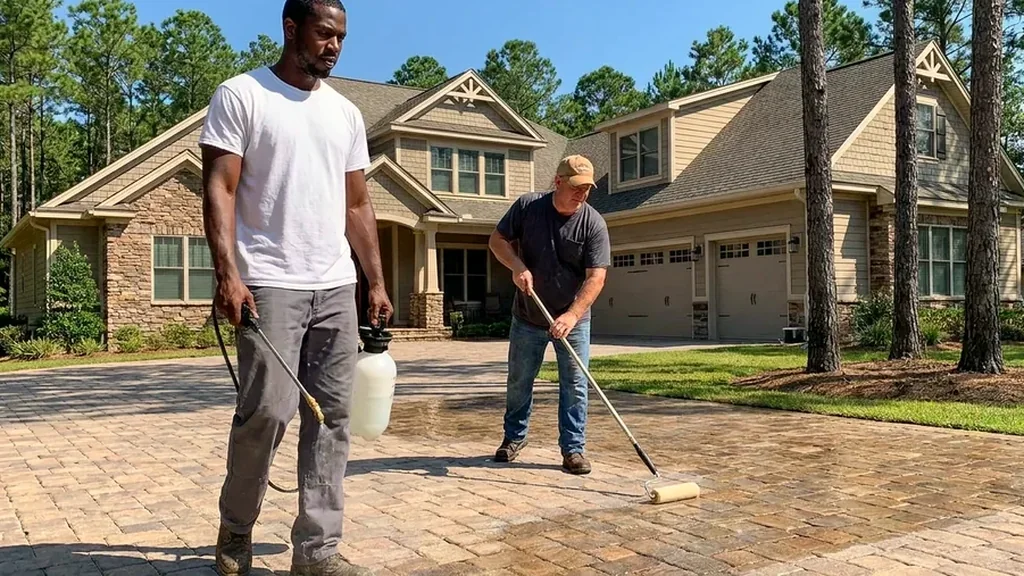
Spray, back-roll and stay off
Sealer goes on with a sprayer and is then back-rolled into the joints for even coverage. You choose matte or wet look before this step. Plan on foot traffic after a few hours and cars off for about a day, depending on the sealer and the weather. Later, water that beads on the surface shows the coat is working. If it soaks in and darkens the pavers, the coat is worn and due again.
Complete paver services in San Jose
A San Jose job runs in four stages: wash, re-sand, dry and seal. The wash clears leaf film and mildew from under the oaks. Fresh sand goes into the joints next, and sealer comes last, which keeps dirt from being trapped beneath it. Call (904) 875-5989 to ask how long each stage takes on your lot and how many days the whole job needs.
Driveways take turning tires, so the wheel lanes wear first. Front walks under live oaks stay damp and go green sooner. Around a pool, one local paver company says the sealer should carry an anti-slip additive, no matter which finish you pick. Tell the contractor which surfaces you have when you get your free estimate.
You will choose between water-based and solvent-based sealer, and then between matte and wet look. A water-based product cannot be laid over a solvent-based one, which puts the old coat first in line. Matte suits a Spanish-style house, while a wet look has more shine and tends to show scuffs earlier. Call (904) 875-5989 to talk it through.
Timing follows the weather. Most of the Jacksonville area's rain falls from May to September, often in short, hard storms, and a coat laid over damp stone often turns white. A shaded San Jose patio, hemmed in by oaks, dries slowly, so the contractor may wait for a longer dry stretch. For a date that fits your street, get your free estimate.
Questions to ask before you hire
- Will you give me the square footage and the price per square foot in writing?
- Do you move my potted plants and furniture, or do I clear the area first?
- How do you get dirt and old tire marks out of my driveway pavers?
- My water comes from a well, so can the rust marks from my sprinklers come off before the sealer goes on?
- Is the sealer you plan to use made for a patio that sits in full sun all day?
- What does the job cost if only part of my pavers need work, like the front walk?
- How many days should the sealed pavers stay clear of foot traffic?
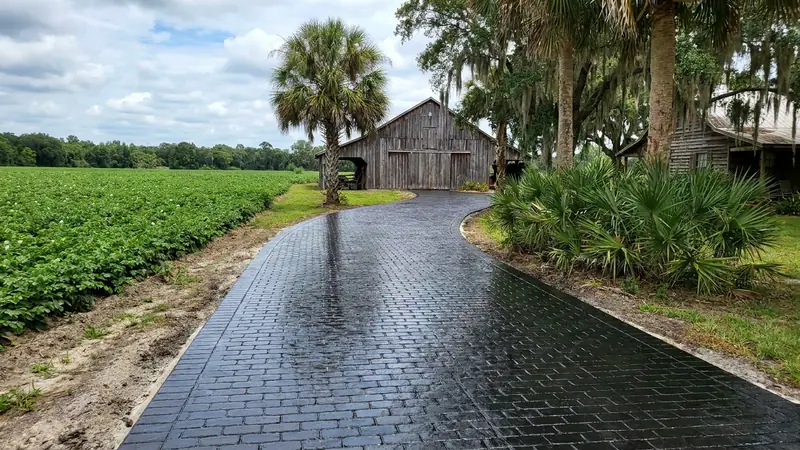
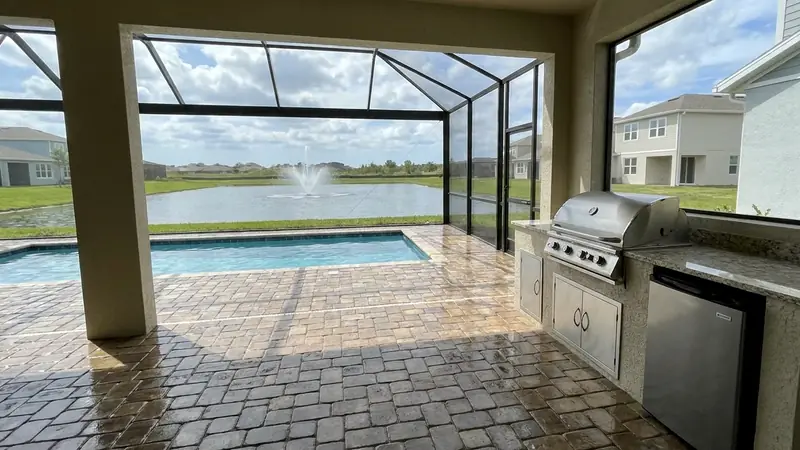
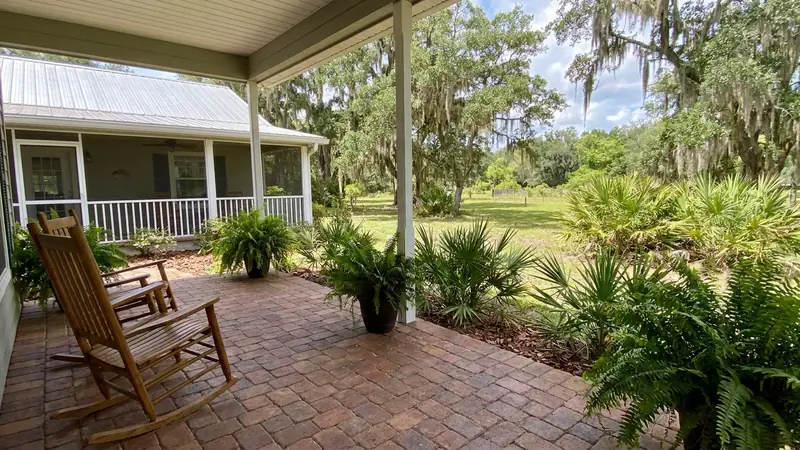
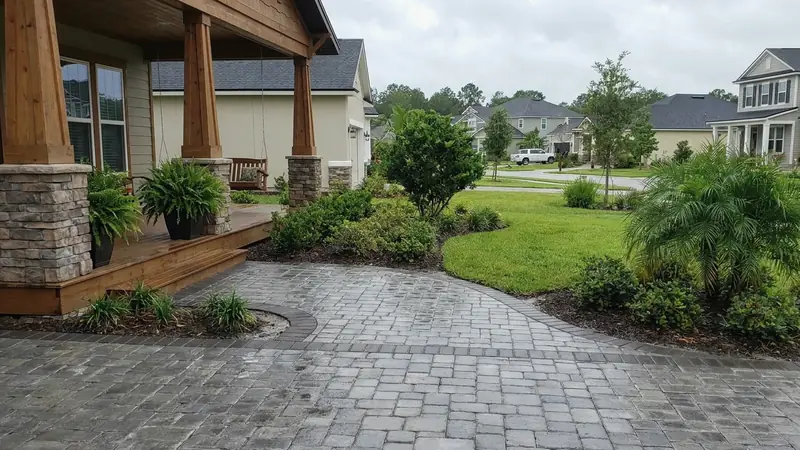
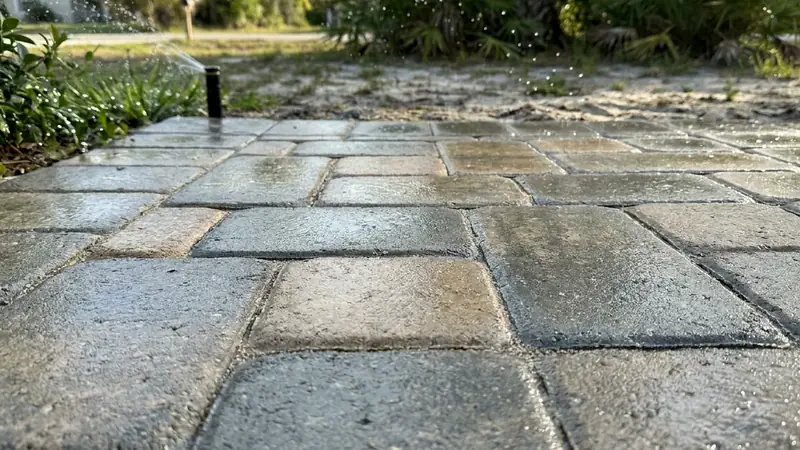
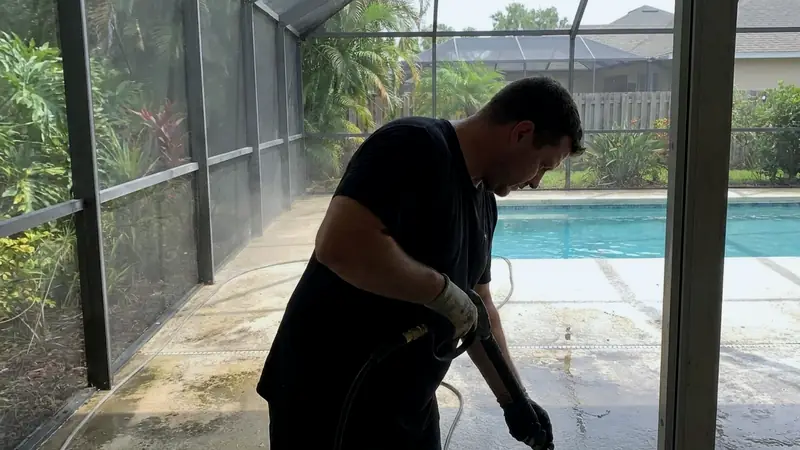
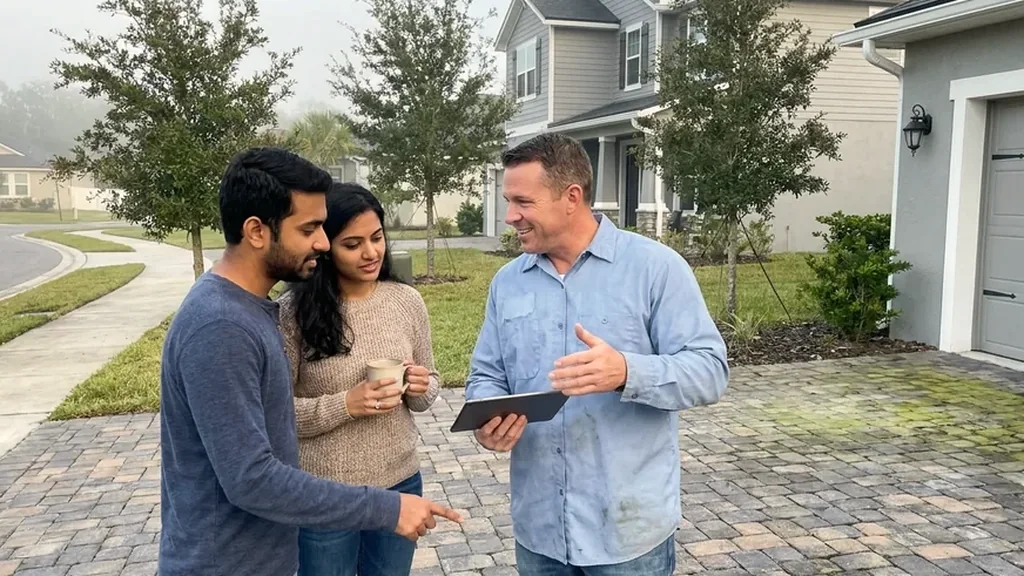
What do sealed pavers look like around San Jose?
Why local matters in San Jose
A contractor who works San Jose knows the first question to ask: which era is your house from? A 1920s Estates home, a postwar ranch and a gated townhome come with different surfaces and different rules. That answer shapes the wash, the sealer and the paperwork. Call (904) 875-5989 to reach a contractor who already knows the Southside.
Local knowledge helps with weather too. Most rain falls from May to September in short, hard storms, and the live oaks keep dropping leaves all year. A sealing day has to fit both. You can get your free estimate and ask how the contractor plans around them.
Older homes ask for extra care. Twenty-one of the original Estates houses are on the National Register of Historic Places, all in Mediterranean Revival style, and harsh rinse water is hard on old walls. A contractor who knows the area asks what your house is built from before the wash starts. If that sounds like your home, get your free estimate, with no obligation to hire anyone.
Was San Jose planned before the first house went up?
Yes, it was drawn on paper first. Developer Charles Strickland hired planner John Nolen in 1925 to lay out about 1,000 acres of old plantation land, with 1,911 lots on radial streets. The San Jose Hotel opened on New Year's Day 1926 and later became Bolles Hall at The Bolles School. If you live near the Donald Ross golf course, later the San Jose Country Club, get your free estimate.
The land boom ended in 1926, and Alfred DuPont built the 25-room Epping Forest mansion on the planned second hotel site. Goodbys Creek Preserve and Camp Tomahawk Park, a former day camp the city bought in 1981, sit toward the southern streets. The old administration building at 7423 San Jose Boulevard became San Jose Episcopal Church. If your street is close to one of these places, call (904) 875-5989 and give the cross streets.
Frequently Asked Questions
Do San Jose pavers need sealing?
Yes, in most cases. One Jacksonville company points to less UV fading, less joint washout and less mildew, and the last one counts under the oaks that shade many San Jose lots. A dense stone like travertine may stay unsealed, the same company adds. Not sure what your pavers are? Ask at the estimate.
How much does it cost to clean and seal pavers in San Jose?
Expect a figure between $1.75 and $3.25 per square foot for the wash, new sand and sealer, which is what companies in the region publish. Shade growth, lost joint sand and old sealer move a San Jose job within it. Have the quote show total square feet, then divide to check the rate.
Which paver sealer works for Florida homes in San Jose?
The right one depends on what is on your pavers now. A water-based product will not go over a solvent-based one, which makes the existing coat the first thing to settle. Then you pick matte, which keeps a Spanish-style house quiet, or a wet look, which deepens color but shows scuffs sooner.
What do professionals use to seal pavers in San Jose?
Professionals use a water-based or solvent-based sealer, applied with a sprayer and then back-rolled into the joints. They wash the surface and put fresh sand in the joints first. Ask the contractor for the product name so you can match it at the next coat. Keep that name with your house papers, since it saves guessing later.
Is it better to spray or roll paver sealer?
Most pros do both: spray first, then roll over it. The same Jacksonville source warns that rolling alone risks lap marks, while spray and roll together work the sealer into the joints and avoid puddles. The contractor will pick the method for your surface. On a large San Jose driveway, spraying also saves time over rolling alone.
How often should I reseal pavers in San Jose?
Most quotes you hear run two to five years per coat. A sunny driveway with daily tires sits toward the short end, and a shaded walk can go longer. If water soaks in within seconds instead of beading, the coat is spent. Wet look shows scuffs sooner than matte, so that choice matters too.
Do I have to ask my HOA before sealing pavers in San Jose?
Check your declaration first, because rules differ from one community to the next. Florida law lets an association review plans only where its own documents give it that power, and a denial must name the rule it relies on. Gated San Jose communities often have their own guidelines, so ask before you book.
Does sealing help with the mildew and weeds on San Jose pavers?
Yes, because the wash removes the growth and fresh sand and sealer make it harder for new growth to take hold. Shade under live oaks keeps pavers damp, so green film can return where the sun rarely reaches. A sealed surface is easier to rinse when it does.
Do pavers near Goodbys Creek or Camp Tomahawk Park need extra prep?
They often need a closer look at shade and debris. Camp Tomahawk Park has mature oak, pine and maple trees, and its creek runs on to Goodbys Creek, so homes along that corridor can get leaves and needles from more than one tree. The contractor checks for green film, settled edges and root lifts before pricing the job, and seals only when the surface is dry.
How long before cars can go back on a sealed San Jose drive?
Shoes are fine on it after a few hours, though tires need longer. Keep vehicles off for roughly a day, since the exact wait shifts with the sealer and the weather. Your contractor can name an exact hour for the product on your drive. Park on the street or at a neighbor's the night before so the garage side stays clear.
Ready for a Free Estimate in San Jose?
Call (904) 875-5989 and tell us about your pavers.
Free, no obligation